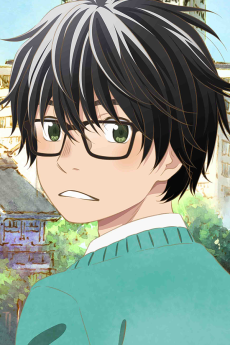
Rei Kiriyama is already a professional shogi player at seventeen. He lost his family in an accident, was taken in by a friend of his father's, never found a place in that house either, and now lives alone. He did not turn professional because he was good at shogi so much as because shogi was the only thing left.
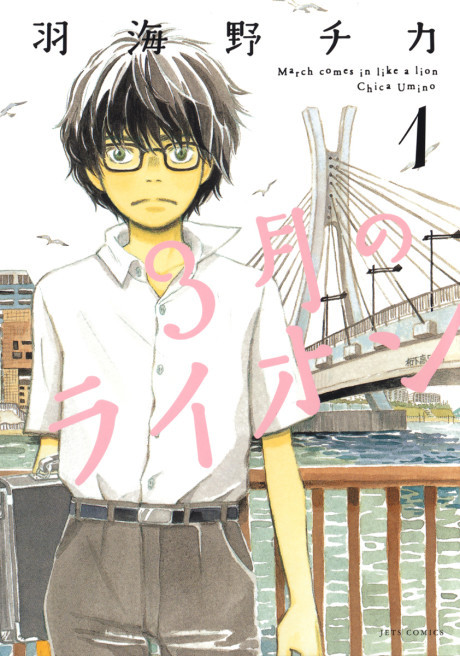
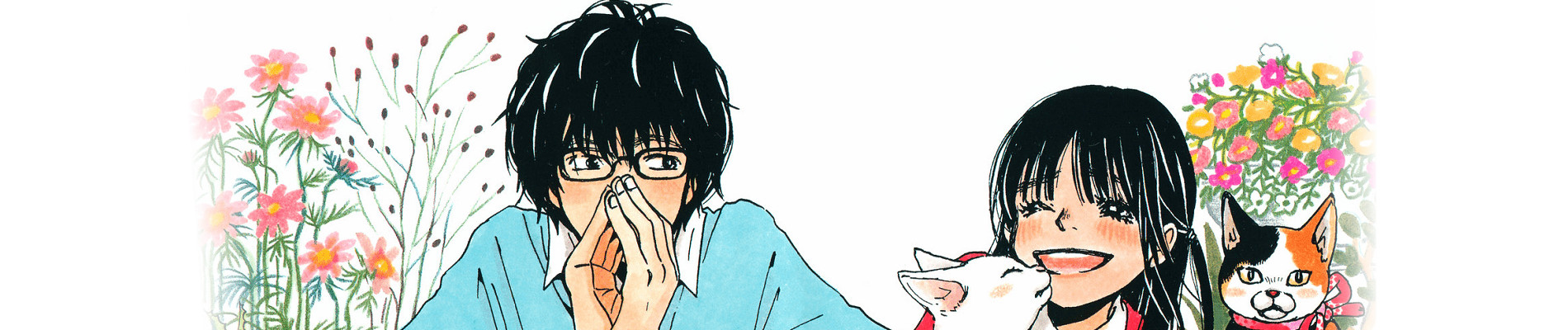
The story moves between two rooms. One is the playing hall: quiet, long, and a place where a loss has to be carried alone until the next match. The other is the Kawamoto sisters' house across the river, where a meal is on the table, someone tells you to start eating, and leftovers get wrapped for you to take home. The speed of Rei's recovery is decided in the second room.
Chica Umino's signature is showing you a bright scene and then, with no warning, the floor underneath it. Long stretches deal with bullying at school and with illness in a family, and the shogi matches sit between them as the place where a character checks who they are.
Serialisation began in Hakusensha's Young Animal on 13 July 2007 and continues. The series won the grand prize at the 4th Manga Taisho, the 35th Kodansha Manga Award, the Tezuka Osamu Cultural Prize grand prize in 2014 and the Japan Media Arts Festival grand prize in 2021.
Shaft animated it, 22 episodes from 8 October 2016. Because the adaptation renders psychological states through visual direction, it is often cited as a case of carrying a manga's white space across by other means.
You do not need to know the rules. What happens on the board comes through in faces and commentary, and what the series is really about is not the result but what the person who lost eats the next day.