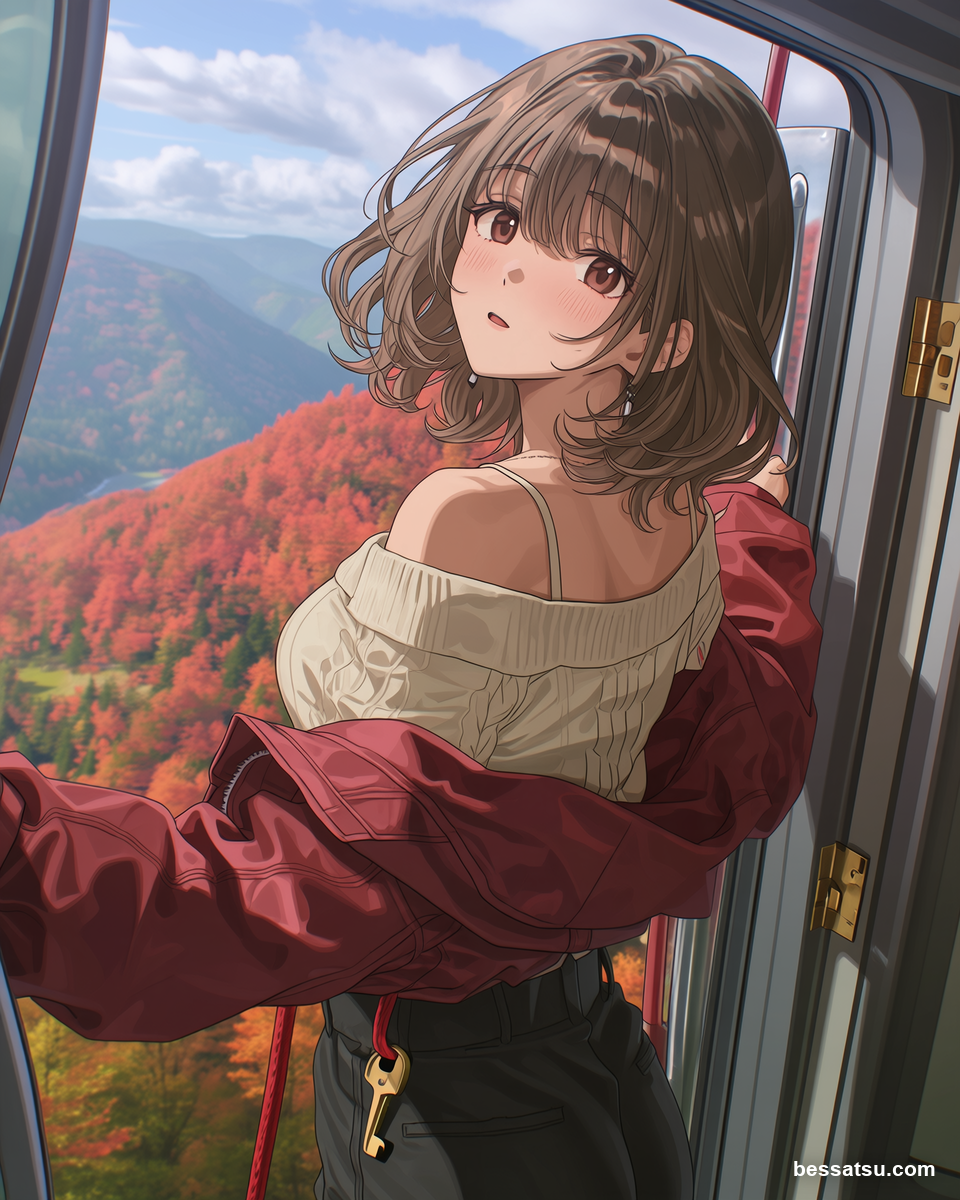
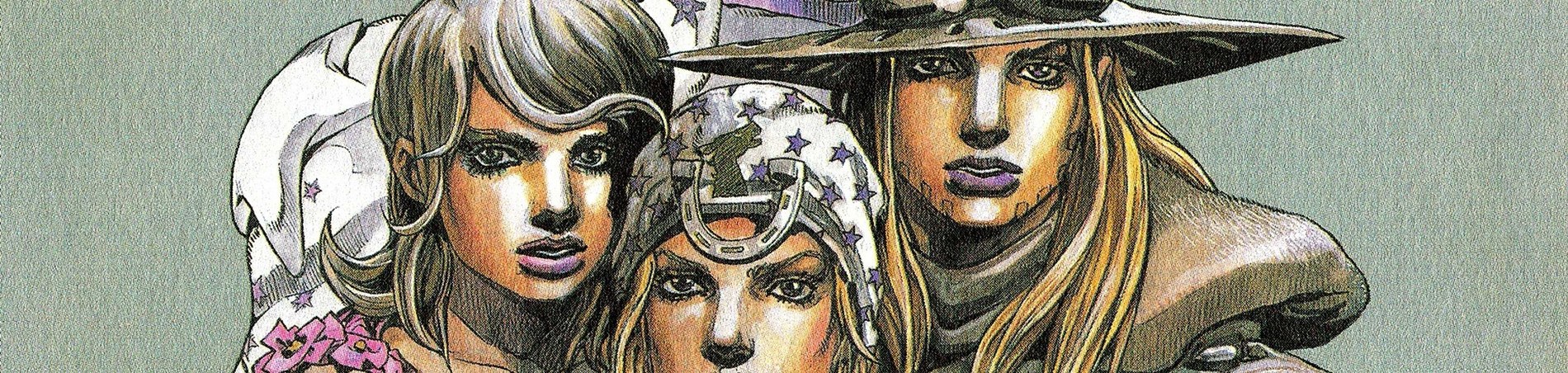
Shueisha sells this manga under two different titles. Volume 1 of the Jump Comics edition, out on 20 May 2004, carries only STEEL BALL RUN on the cover. The bunko edition that followed in February 2017 adds JoJo's Bizarre Adventure Part 7 to the same spot. That is why one work answers to both names, and the covers are where you can see it.
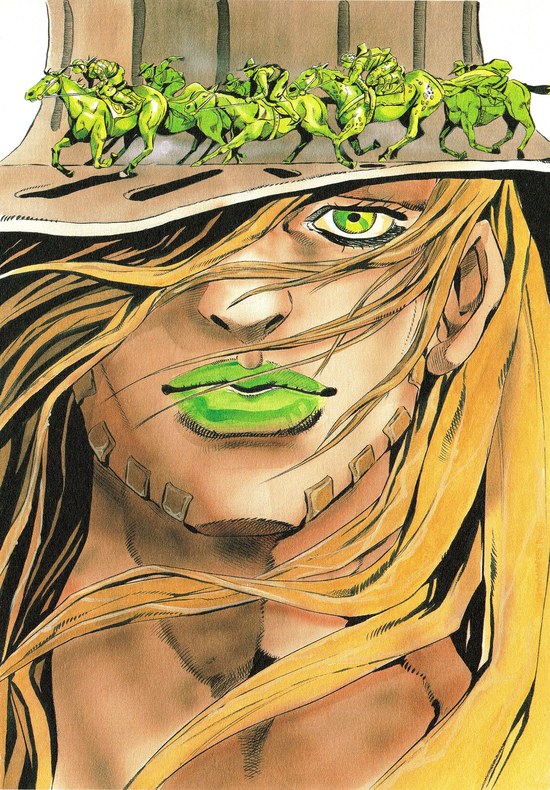
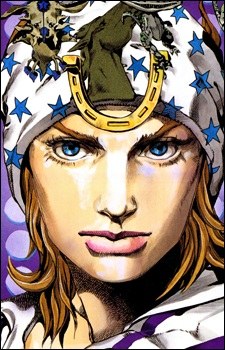
The scale of the race sits in the blurb on that first volume. America, 1890. Roughly 6,000km of ground. The first crossing of the North American continent on horseback, with fifty million dollars for the winner. The bunko blurb puts the field at 3,852 riders. Johnny Joestar, a prodigy jockey who lost the feeling below his waist, signs up after a chance brush with Gyro Zeppeli's technique gives him something to hope for.
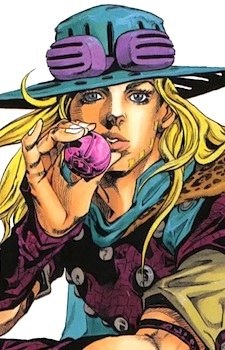
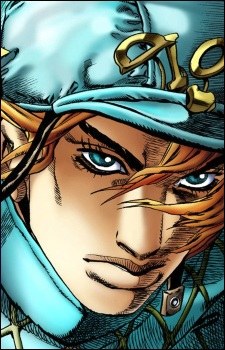
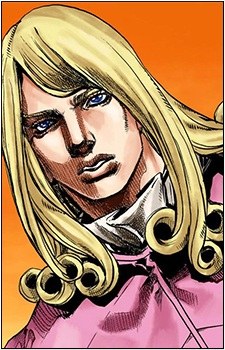
Running is not all of it. The blurb for volume 7 has Gyro and Johnny find the second corpse part, a pair of eyes, only to have it taken by a Diego who has turned into a dinosaur. Volume 24 opens with Johnny bringing down the president and losing the corpse again to someone else. The race and the hunt roll across the same board.
David production made the anime and Netflix distributes it worldwide. The 1st STAGE released on 19 March is a single 47-minute special. The 2nd and 3rd STAGE run to eleven episodes, arriving every Friday from 25 September. Yasuhiro Kimura directs, with Shogo Sakata as Johnny, Yohei Azakami as Gyro and Kaito Ishikawa as Diego.
Two editions, then. Twenty-four volumes in Jump Comics, or the same story packed into a sixteen-volume bunko set. How far into those volumes the remaining eleven episodes reach is not something the official site has said yet.